
By: Nikita Selene Xue
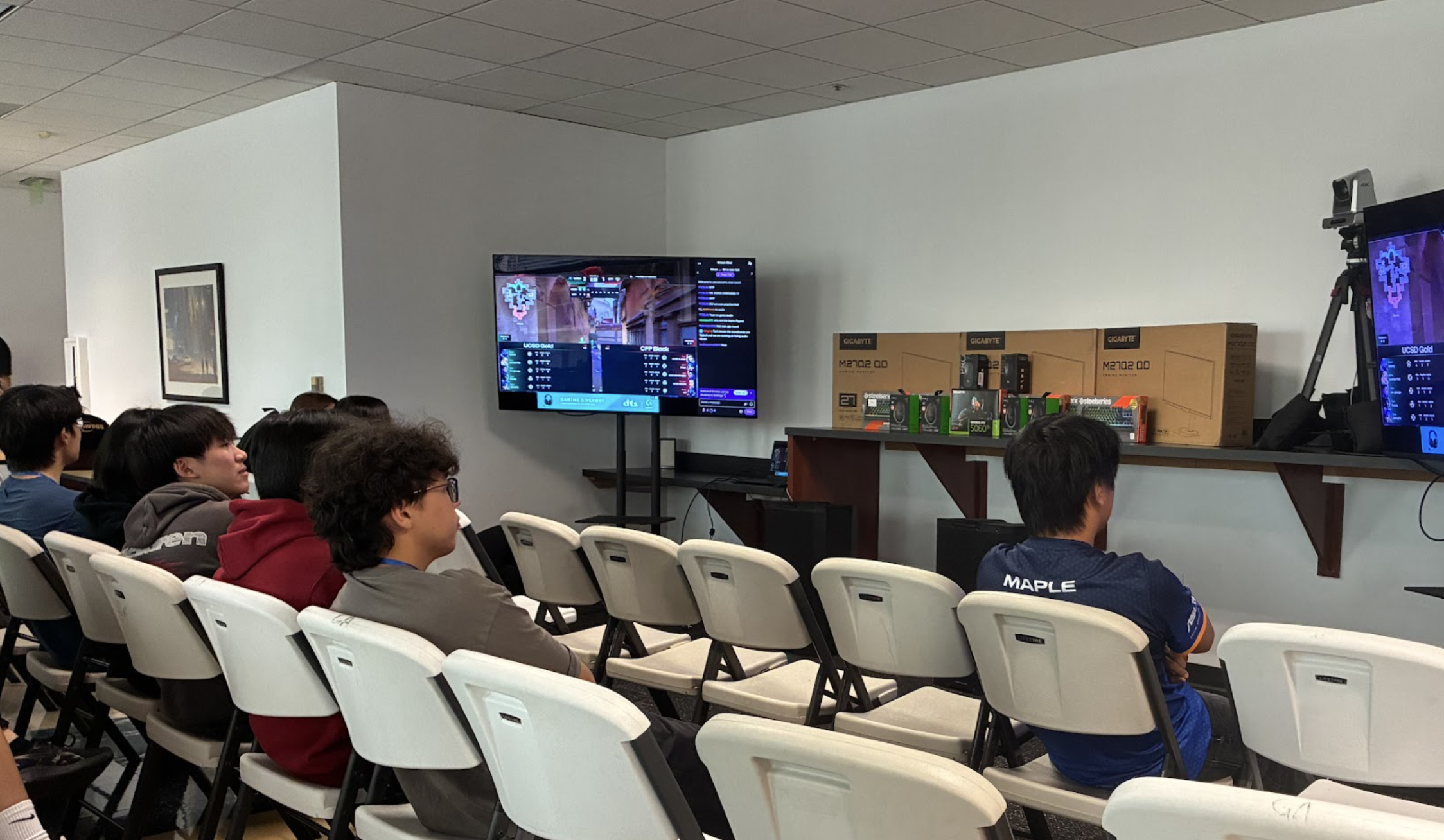
This past Sunday was the finals of USC Valorant’s first ever Coliseum Cup, a multi-school tournament hosted both online and in-person. The finals, consisting of four teams across four different schools, were in person, but truthfully, the Coliseum Cup had been going on for weeks. 20 teams competed in total, participating in online matches through a bracket system before the winning teams were invited to play in the in-person finals.
A student run-initiative, the Coliseum Cup was hosted by Newegg’s Gamer Zone, a free-to-play PC gaming lounge. While the teams competed in the lounge, the audience watched from a livestream in the room besides, enjoying food and drinks provided by the organizers. Between the games, activities would keep the audience entertained, with raffle prizes provided by Newegg. It’s a great experience to chill, hang out, and meet new people from different schools with the same interest in esports.
Minh Luu, the co-president of USC Valorant, tells me, “The idea [of the Coliseum Cup]... sprouted from last year’s Games Expo showcase.” He was in charge of managing the Valorant tournament during it, and while USC Esports have done show matches and invited schools to come play, they hadn’t done a full tournament where other schools could come play in a LAN before. “A lot of collegiate tournaments invite the [nearby] schools or schools that have good programs, so [schools with less developed gaming programs] have a lot of talent but don’t have a lot of exposure.”
USC Valorant identified that issue and wanted to foster a better, more united college community. “Collegiate esports is growing in a way that needs initiative,” Minh tells me. “There are a lot of schools that want to play.” But tournaments are few and far between, and most of them aren’t free to play. “[USC Valorant wondered], ‘what can we do as USC, a school that has a developed esports program, to address this issue?”
The Coliseum Cup was what they could do. Months of planning culminated in the tournament, and then the full-day affair of finals. The month-long tournament that culminated in Sunday’s LAN had a grand total of 13 schools, 20 teams, and 160 students participating. “We’ve never seen this kind of scale before,” Minh says. “This is the first time USC’s done this, let alone any school in [southern California].”
Their accomplishment sets the standard for what events college groups can host. USC Valorant’s goal? “We want to plant the seeds of what collegiate esports can be.”
On a smaller scale, production director James Parungao let me know about how accessible events like these are to people who want to get involved in esports. As the production director, James was in charge of managing schedules, getting staff, and planning for possible delays. Roles such as being an observer—the operator of the in-game camera for those watching—and casters—live commentators for the game—are very entry-level in the collegiate scene.
“The people I recruited for this event [were a mix of people] doing it for the first time and [people who] have a lot of experience,” he says. “That kind of blend allows both new staff members to learn from those more experienced while also providing… a fun overall environment.”
The Coliseum Cup was definitely a really fun experience for both USC students and the other schools involved in the tournament. Cal Poly Pomona, UCLA, and UC San Diego were the ones in the finals, culminating in a win by Cal Poly Pomona. Later in November the USC and UCLA E-Conquest will mean more LAN events, but for now keep your eyes out for USC Esports free plays and Twitch channels.
